Monday, March 11, 2013

upserve

Excerpt from the book To Sell is Human by Daniel Pink

Upserving means doing more for the other person than he expects or you initially intended, taking the extra steps that transform a mundane interaction into a memorable experience. This simple move - from upselling to upserving - has the obvious advantage of being the right thing to do. But it also carries the hidden advantage of being extraordinarily effective. 

Anytime you're tempted to upsell someone else, stop what you're doing and upserve instead. Don't try to increase what they can do for you. Elevate what you can do for them.

~~

Sounds absolutely interesting.
(Something similar to Gandhian principle I guess)

Srik

Sunday, March 10, 2013

Lakshmi Devi Temple, Doddagaddavalli

Since almost 4 years I have been trying to visit all the Hoysala architecture temples, trying to photograph and document as much as possible. I have developed a great affection towards Hoysala architecture and I find every temple absolutely interesting and remarkably great. Here is one more from my recent visit with my family to this wonderful Hoysala masterpiece. 

Lakshmidevi temple, Doddagaddavalli, constructed in 1114 CE
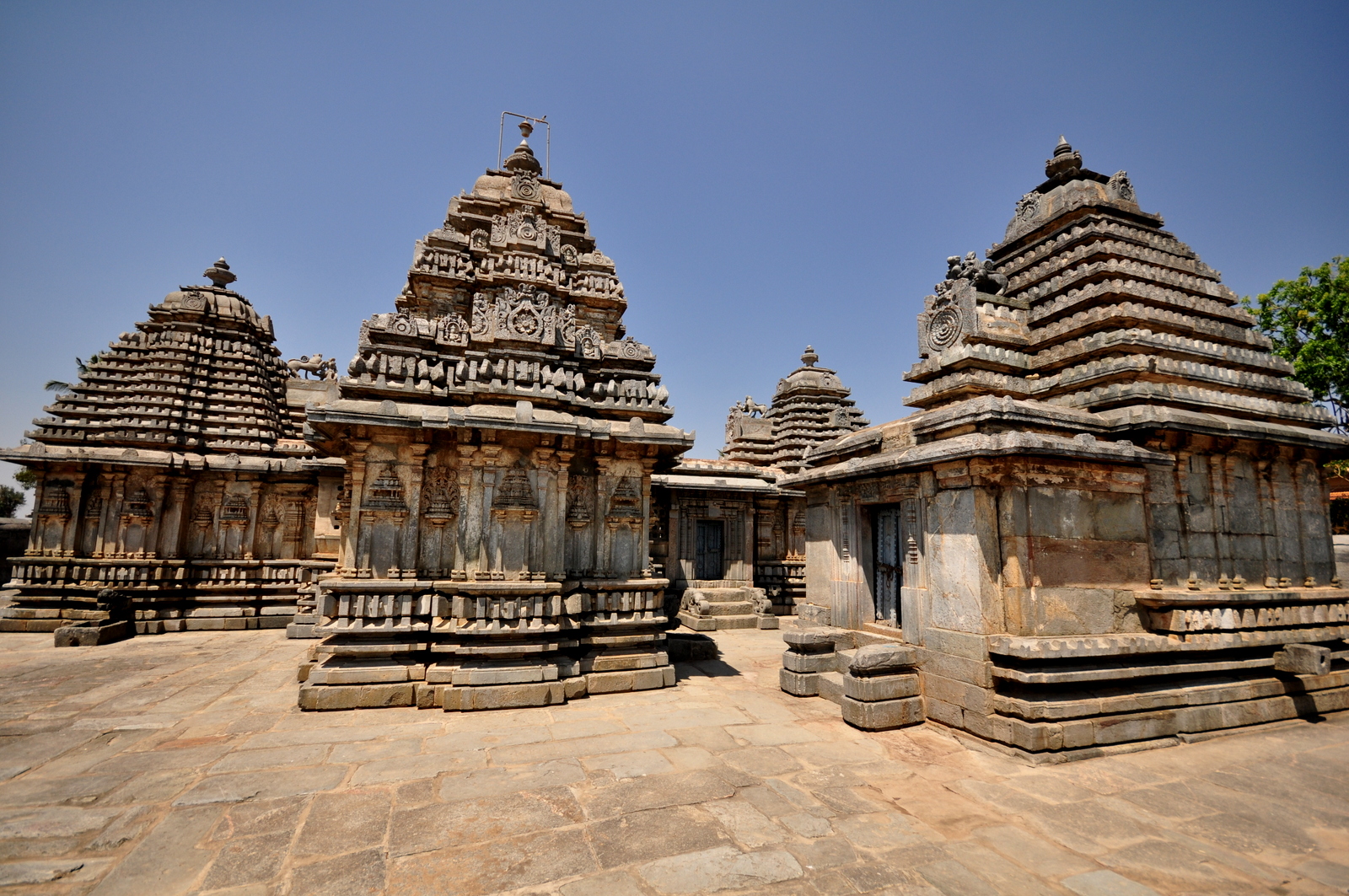
Doddagaddavalli is about 20 km from Hassan.  The Lakshmidevi-temple found here is a small and modest monument, placed in the centre of a walled courtyard that forms a perfect unity with the temple. Embedded in the walls, four small shrines are placed at the corners of the courtyard. It especially is the fine ensemble that makes the temple very rewarding for a tourist visit. The monument dates from 1113 AD and is situated in rural surroundings on the shore of a tank. This is one of the earliest known temples built in the Hoysala style. The building material is Chloritic schist, more commonly known as soapstone. The temple does not stand on a jagati (platform), a feature which became popular in later Hoysala temples. The temple was commissioned by a merchant called Kullahana Rahuta and his wife Sahaja Devi.

Mantapa at the entrance of the temple. Looking west.

Entry to Lakshmidevi temple through this beautiful mantapa.
The plan of this temple is very unique, because it has four shrines placed around a common centre. Three of them share a small open hall, and at the fourth side of the hall there is an oblong extension providing two lateral entrances to the temple and connecting it with shrine number four. All shrines have a nose and, inside, a corresponding vestibule, but the fourth shrine only has a a small one with thin walls. The latter is exceptional, for it is rare in Hoysala architecture that temple parts are only half-present. Also the hall is exceptional here, for it is open and nevertheless has a square ground-plan: because all four of its sides have temple parts attached to them, no staggering side remains. 

Entry door to the temple. Looking west


One of the four shrines connecting the other three to the same hall. Unique 4 garbha-gudis connected to the hall.


4 shrines that are interconnected and the independent 5th shrine. Looking East.

Kadamba shikara to the left with kalasa on top. 

Simple structure of one of the shrines seen from the rear side. 

The shrine looking South.

Only a few meters from the main temple there is a fifth shrine; together with its vestibule it stands free and faces of south. Though coarse in execution it belongs to the original design of the ensemble. It is dedicated to Bhairava, a terrifying form of Siva. Not seldomly a separate simple Bhairava shrine like this one is added to a temple; mostly it is so simple as to have a superstructure at all, but here it has a tower and a nose, both of them complete with kalasa and Hoysala crest. 


Smaller shrines at one of the 4 corners. 

Small shrine in one of the corner of the temple with a nose and Hoysala crest

Lateral entrance, Lakshmidevi temple
Finally there are still four more shrines, small ones situated in the corners of the courtyard, with two of their sides embedded in the compound wall. Also these four shrines each have a superstructure complete with kalasa and Hoysala crest. The plan of the ensemble is completed by two entrances across surrounding walls; in the eastern wall there is a large one, which is a complete building similar to an open hall, and in the western wall, there is a small one being framed opening only. The overall character of the ensemble described now is very fine, the more so because the pavement of the courtyard is of the same kind of stone as all the elevated parts. Hence altogether the ensemble shows nine towers, all of them with nose, and all of them with kalasa and Hoysala crest. 

Pillar inside the temple illuminated with the light from outside.

Mantapa inside the temple that connects the three shrines. 

Demonic living corpse (betalas)

Kali on the roof inside the temple

Panoramic view of the temple from the south-western end

Wide-angle shot of the corner shrine and the mantapa at the entrance.

At the rear side of the temple and a dried up lake 
(C) 2013, Srikanth Parthasarathy

(Source for the text)
A Complete Guide to Hoysala Temples by Gerard Foekema

Friday, March 8, 2013

nowadays

Excerpt from the book To Sell is Human by Daniel Pink

Nowadays, everyone-whether we're the head of an organization or its freshest hire-faces a torrent of information. The McKinsey Global Institute estimates that the typical American hears or reads more than one hundred thousands words every day. If we leave our desk for a few minutes to grab a cup of coffee, greeting us upon our return will be new e-mails, texts, and tweets - not to mention all the blog posts we haven't read, videos we haven't watched, and, if we're over forty, phone calls we haven't returned. 

~~

I cannot agree more on the above.

Srik

Monday, March 4, 2013

Hoysala Temple of Doddagaddavalli

The Lakshmi Devi Temple is one of the earliest known temples built in the Hoysala style. The Lakshimi Devi temple is located in Doddagaddavalli, a village in Hassan District of Karnataka state, India. It is located 16 km from the district capital Hassan and lies on the Hassan city - Belur highway. The town's main attraction, the Lakshmi Devi temple, was built by the Hoysala Empire King Vishnuvardhana in 1114 C.E.

Here are some of the panoramic pictures of the temple. Click on the pictures to enlarge them.

 a unique chatuskuta construction (four shrines and towers). Looking East

Entry to the temple. Looking East

The 4 shrine complex looking South East.

Kadamba Shikara with Kalasa on top. Looking West.

Mantap and the gopuras looking North East

Closeup of the shikaras

The compound wall and the shikaras looking North. 
Rear view from the western bank of the Doddagaddavalli kere. 

The temple is on the western bank of this lake and this lake has dried up for the first time. 
2013 (C) Srikanth Parthasarathy

Thursday, February 28, 2013

conversations

Excerpt from the book To Sell is Human by Daniel Pink

Everything good in life - a school business, a great romance, a powerful social movement - begins with a conversation. Talking with each other, one to one, is human beings' most powerful form of attunement. Conversations help us understand and connect with others in ways no other species can. 

But what's the best way to start a conversation - especially with someone you don't know well? How can you quickly put the person at ease, invite an interaction, and build rapport?

~~

I know! And I remember so many of those conversations. Every conversation was full of life and possibilities, that eventually led to so many of the initiatives that I am part of. I miss some of those conversations with some people and I enjoy the same with some people I meet with very often.

Yes, I believe conversations make us!

Srik

Friday, February 22, 2013

fixed skills

Excerpt from the book To Sell is Human by Daniel H. Pink

There is a significant change in the way we do business. When organizations were highly segmented, skills tended to be fixed. If you were an accountant, you did accounting. You didn't have to worry about much outside your domain because other people specialized in those areas. The same was true when business conditions were stable and predictable. You knew at the beginning of a given quarter, or even a given year, about how much and what kind of accounting you'd need to do. However, in the last decade, the circumstances that gave rise to fixed skills have disappeared.

A decade of intense competition has forced most organizations to transform from segmented to flat (or at least, flatter). They do the same, if not greater, amounts of work than before - but they do it with fewer people who are doing more, and more varied, things. 

~~
Well, I kept wondering for a while after joining the large organization on the scope of work I do or any person who joins any random large organization does. Each and every job has been narrowed down to do one particular activity and people don't tend to move or think beyond the same. Where as in the flatter organizations, people do things that requires their ability to think beyond what they are supposed to do. There is no elasticity in the larger organizations or more specifically the segmented organizations. In smaller organizations, everyone does multi-tasking and will be selling themselves every moment in the process of completing the job or growing the organization.

So,I guess size of the company is inversely proportional to the scope of your job?! 

Srik

Tuesday, January 22, 2013

Twin Temples of Mosale

To commemorate our Foundation Day of Canadia Trust on December 08, 2012, we planned a one day trip to Mosale - A Hoysala Architecture site. 

Mosale is about 10 km from Hassan. Here two small temples are found lying side by side, equal in design and execution, forming a perfect twin. Both temples are complete, and notably their superstructures show fine sculpture. It was built about 1200 AD and today it is found at the northern edge of the small village, in a nice rural setting. 

Twin temples of Mosale seen from the East end

Pillar design

Nagesvara temple 

Twin temple from the southern end

Twin Temples from the South-Western end

From the South-East corner

Carvings on the wall of the Chennakesava temple

Carvings on the walls of the temples
Both temples are of a simple plan, they consist of a shrine with nose, a closed hall and a porch. The southern one is Saiva and named Nagesvara, the northern one is Vaisnava and named Chennakesava. The temples are identical and aligned, and so it is possible to consider them as dvikuta, as an ensemble with two shrines. Because both shrines have a tower, the pair offers a very fine view. 

Happy kid's face amidst the carvings 

Gopura of the Nagesvara temple

Sculptures on the Chennakesava temple

Sculptures carved on the walls

Carvings on the walls
The shrines are of a simple design, square with three projections per side. Their superstructures are a marvel, because they are complete and because their decoration is so successful. The two beautiful kalasas and the two beautiful Hoysala crests are the most striking, but also all architectural parts below them deserve attention, because the traditional decorations are so fine and undamaged. The same holds for the superstructures of the halls and the porches. These consist of a row of topping miniature roofs above heavy eaves, and are perfectly decorated and preserved. 

The interior of both temples is fine. In the cella of the Nagesvara-temple there is a linga and in the cella of Chennakesava temple there is a cult-image of Kesava. 

One of the pillars inside the Nagesvara temple

Priest and his god
After our temple visit in Mosale, we all headed to the lake at the village entrance and had our packed lunch for the day. TS and Lavanya had got us Puliogre, and we all had a good time at the beautiful lake. And because we had some more time left before we headed back to Bangalore, Dhiraj suggested us to visit Anekere temple. We all readily agreed. Will post photographs of Anekere in my next post. 

Source for the text: A Complete Guide to Hoysala Temples by Gerard Foekema

(C) Srikanth Parthasarathy